
How fast can you deploy sanitation after a disaster in West Sacramento?
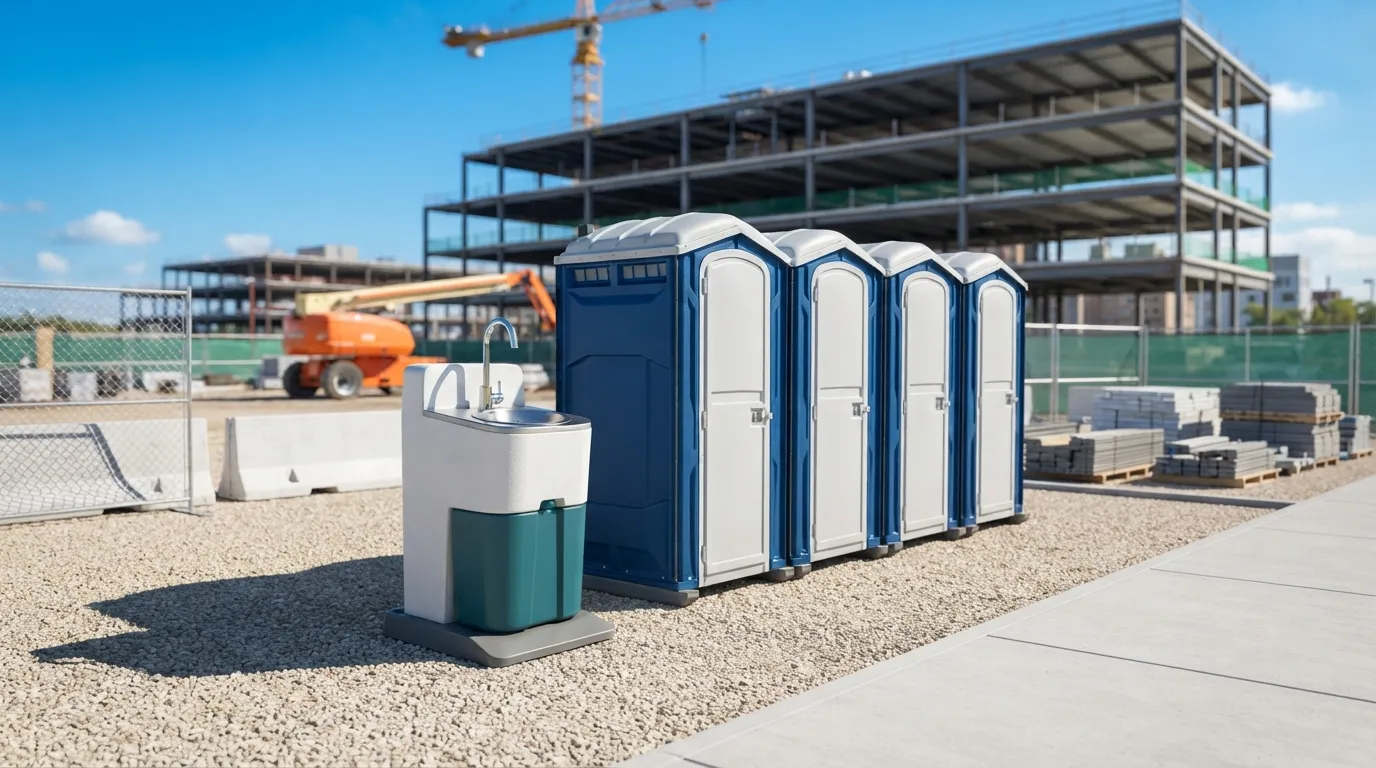
Speed is the whole job in a disaster response. West Sacramento Porta Pros treats emergency porta potty rental requests as same-day priority whenever a truck and unit are free, and most standard deliveries need about 60 feet of straight clearance behind the truck to set units down safely. That matters on flood-damaged streets where debris narrows the approach. Crews pull from standard porta potty rental stock first because it moves fastest, then layer in ADA accessible porta potty units once the site count is known, since ADA Standards section 213.2 requires at least one accessible unit in any cluster and never fewer than 5 percent once numbers climb. Shelters and staging areas often need water fast too, so handwashing station rental and portable sink rental go out on the same trucks. If a residential septic system floods or backs up, that is a different call: check emergency septic service or septic pumping service rather than waiting on toilet delivery. For a shelter running for days rather than hours, a restroom trailer rental or the smaller 2 stall restroom trailer covers more people with less servicing. Debris cleanup crews pair the restrooms with a roll-off dumpster rental, often a 20 yard dumpster rental for storm debris and downed branches.
What does emergency sanitation cost during a disaster?
Disaster response pricing runs close to standard daily rates, not a special disaster surcharge, though weekend dispatch during an active event can run higher because of after-hours labor. Here is what fits inside typical bands for short-notice work in West Sacramento:
| Item | Day | Week | Notes |
|---|---|---|---|
| Standard unit | $100-$350 | $130-$500 | fastest to deploy |
| ADA unit | $200-$400 | $240-$240 | required once a cluster exists |
| Dumpster (debris) | $51-$112 | $426-$778 | for storm cleanup |
| Delivery fee | $100-$500 | $150-$150 | varies by access and distance |
Weekend response during an active event typically runs $199 to $300 for an ADA unit and higher for delivery given after-hours crews. See the full porta potty rental cost breakdown or the porta potty rental per day page if the response stretches past the first 24 hours. Longer recovery periods, weeks not days, usually shift to monthly porta potty rental or a full monthly porta potty rental rate once FEMA or county timelines settle. A grease interceptor tied to a damaged commercial kitchen gets pumped once fats, oils and grease reach 25 percent of liquid depth, a detail worth knowing before a flooded restaurant reopens; see grease trap pumping. Storage for donated supplies or displaced equipment often calls for a storage container rental or a mobile office trailer rental to coordinate response staff.
Why does OSHA and ADA compliance still matter during a disaster response?
Because the rules do not pause for an emergency. Relief workers on site count as employees under construction sanitation rules, and OSHA 1926.51(c)(1) still sets the ratio: one toilet for 20 workers or fewer, then one seat and one urinal per 40 as headcount rises past that. A shelter or staging site with cleanup crews handling contaminated debris, or applying disinfectants and coatings during rebuild, triggers OSHA 1926.51(f)(1) washing requirements, and 29 CFR 1910.141(d)(2) still requires soap and towels or a hand dryer at any handwashing station, not sanitizer alone. ADA Standards section 304.3.1 requires a 60 inch turning circle at accessible units, and section 405.2 caps any ramp at a 1:12 slope, both of which matter when ground is uneven from storm damage. West Sacramento Porta Pros builds these into every disaster deployment rather than treating them as optional once the crisis has passed. For a broader look at ratios and setup, see OSHA portable toilet requirements and how many porta potties do I need. Placement in the public right of way during an emergency still needs confirming with the City of West Sacramento; nothing here should be read as a substitute for that check. Review porta potty permit requirements and general porta potty placement guide before final siting, and if roads are closed, temporary fence rental or crowd control barrier rental can secure a staging area quickly.
How many units does a shelter need during a disaster?
It depends on headcount and hours, but OSHA 1926.51(c)(1) gives the baseline: one unit per 20 people. A shelter housing 60 people overnight needs at least three standard units plus one ADA unit under ADA Standards section 213.2. Larger shelters scale from there; see how many porta potties do I need for exact math.
Can you deliver to flood-damaged or debris-blocked streets?
Usually, yes, but access decides the route. Standard delivery needs about 60 feet of clear straight approach behind the truck. Crews in West Sacramento will scout blocked streets first and may stage nearby if a direct route is impossible; call ahead so dispatch can plan around debris.
Do disaster relief units get serviced more often than normal rentals?
Yes, when population density is high. High-use shelter sites often need service beyond the standard once-weekly interval used for lighter loads, since ANSI/PSAI Z4.3 treats that weekly visit as a baseline for lower use, not a ceiling. Crews adjust frequency to actual headcount during active response.
What if the disaster also damaged a septic system?
That is a separate dispatch from toilet rental. A damaged or flooded septic tank needs pumping and inspection before it is trusted again; call emergency septic service directly. A typical residential tank is pumped every 3 to 5 years normally, but storm intrusion can force an off-cycle pump.
Can you set up sanitation for a temporary shelter or staging site fast?
Yes. Same-day setup is standard practice for active emergencies when a truck is available. Request through request a quote or contact directly, and mention the address and expected headcount so dispatch can match unit count and ADA requirements before the truck rolls.
Next step
Get a delivery date
Tell us the address, the dates and the headcount. We size the order and confirm the route.